


A hamstring strain occurs when the muscle is demanded to produce more force than it can handle, most commonly during high-speed running. Where the tear happens and which tissue is involved directly affects how rehabilitation is approached. Not all hamstring injuries are the same.
Looking for treatment information? Read: Hamstring Injury Treatment: What the Evidence Says
The Hamstring Is Three Muscles, Not One
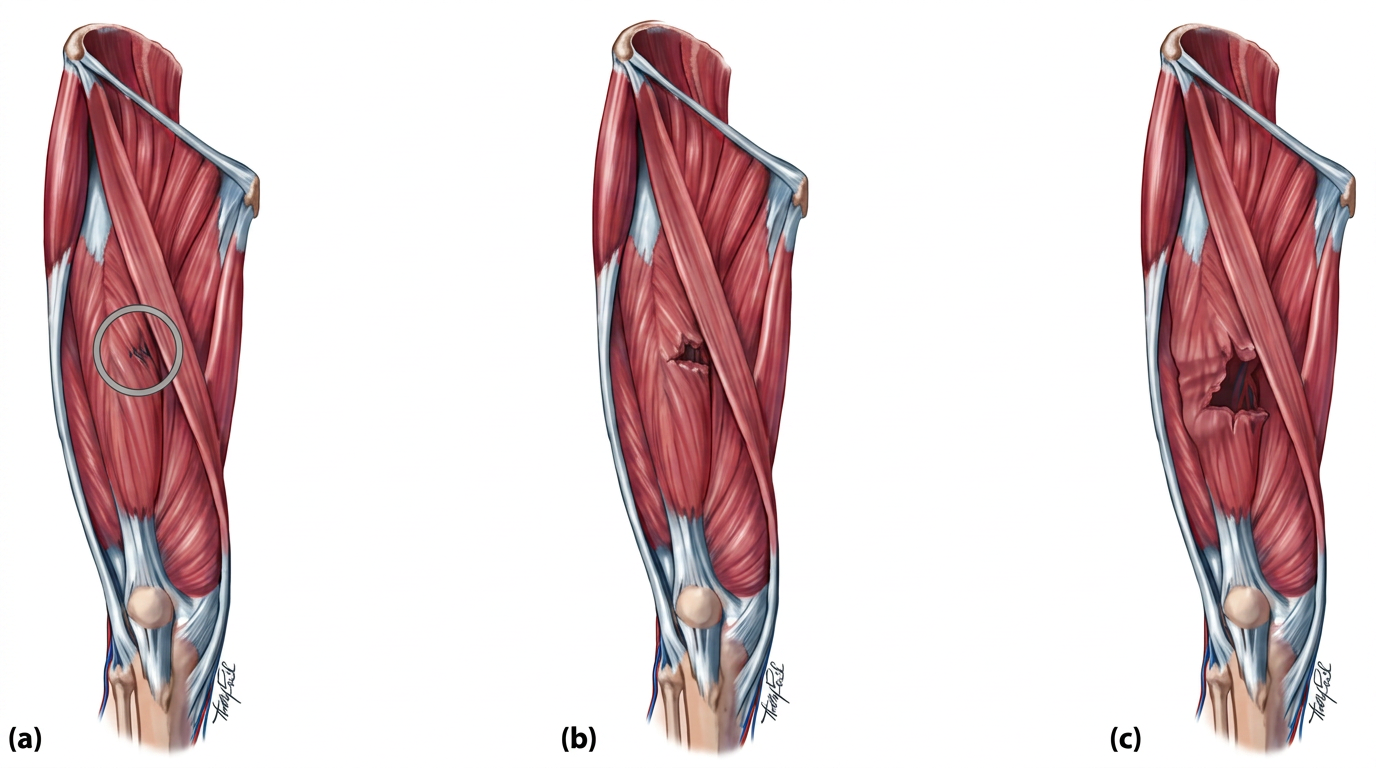
The hamstring is a group of three muscles: the biceps femoris on the outer back of the thigh, the semitendinosus, and the semimembranosus on the inner side. All three cross both the hip and the knee, which means they must control two joints simultaneously under rapidly changing loads, particularly during sprinting.
Why Do Hamstrings Tear?
During a sprint, the hamstrings work hardest just before foot strike, when they are simultaneously lengthening and producing force to decelerate the lower leg. This combination of high force and high speed creates significant stress through the tissue. When that demand exceeds what the muscle can currently handle, fibres tear.
Common contributing factors include intensity beyond the athlete's current capacity, fatigue reducing the muscle's ability to absorb force, and deficits in strength or movement patterns remaining from a previous injury.
Types of Hamstring Injury
Proximal tears
Proximal tears occur at the top of the thigh near where the hamstrings attach to the sitting bone. These range from mild strains to complete tendon avulsions, which may require surgical assessment.
Mid-belly tears
Mid-belly tears affect the main body of the muscle and often have favourable healing potential, although prognosis still depends on the extent and exact location of the injury.
Musculotendinous junction (MTJ) tears
Musculotendinous junction (MTJ) tears occur where the muscle transitions into tendon. The anatomy and tissue characteristics at this location mean injuries here can present and behave differently to mid-belly tears. Rehabilitation needs to be individualised to the tissue involved, the severity, and the specific demands of the athlete's sport.
Distal tears
Distal tears occur closer to the back of the knee and are less common.
Injury Grades: Useful, But Not the Whole Story
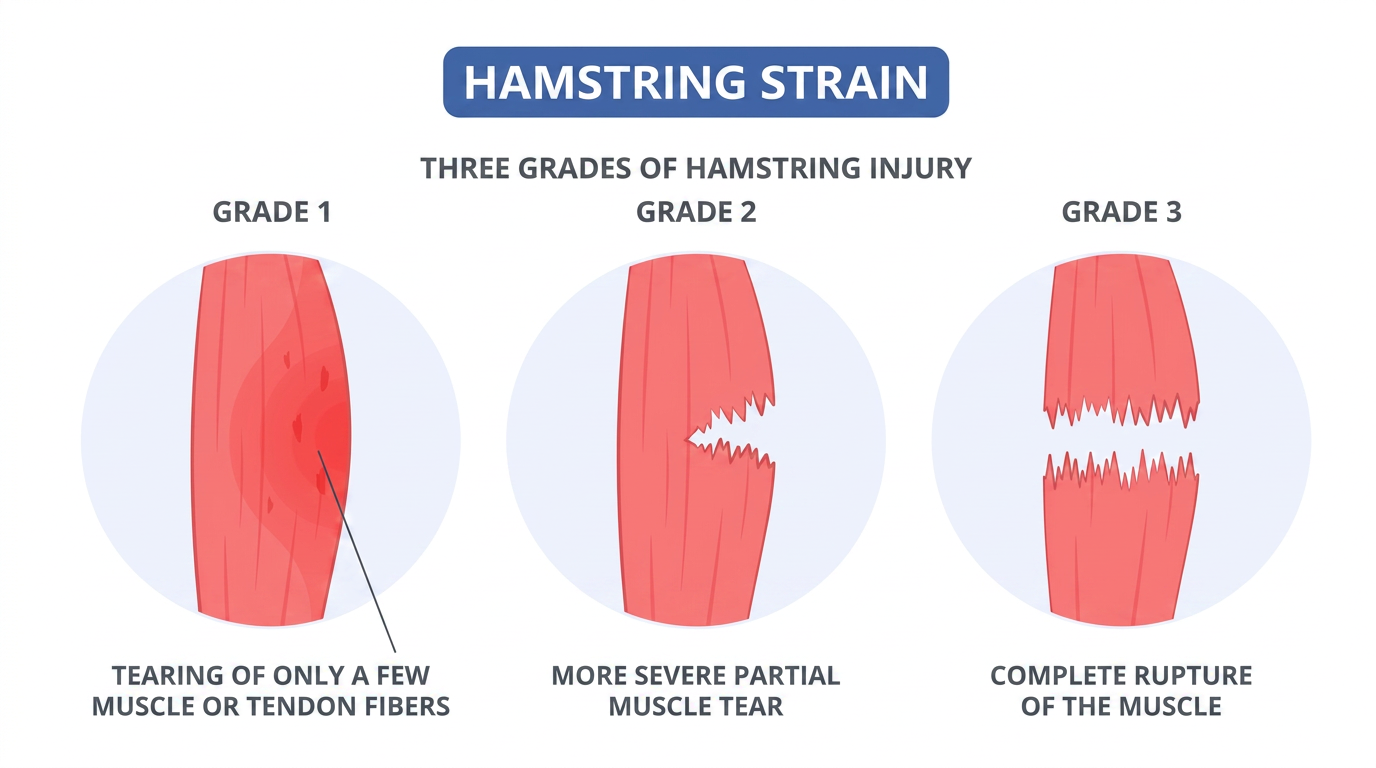
Hamstring injuries are often described in three grades. These timeframes are broad historical estimates rather than return-to-sport targets. Actual recovery varies considerably according to injury location, tissue involvement, strength deficits, and sport demands.
Grade 1
Mild strain, small number of fibres affected. Minimal swelling. Historically associated with return to sport in the range of 1 to 3 weeks, but this varies significantly.
Grade 2
Moderate strain, significant portion of the muscle affected. Historically associated with 4 to 8 weeks, but again highly variable.
Grade 3
Severe or complete tear. May require surgical assessment. Recovery of several months or more depending on the tissue involved and management approach.
The grade label is a starting point. Where the injury is located, which tissue is involved, and how the athlete's strength and running capacity respond to rehabilitation are more informative for planning return to sport than the grade alone.
How IP Physio Assesses Hamstring Injuries
We use diagnostic musculoskeletal ultrasound where clinically indicated to confirm the location and extent of the tear, whether it involves the muscle belly, the MTJ, or the proximal tendon. This informs the loading programme from day one rather than applying a standard approach to every presentation.
For information on what rehabilitation involves, see: Hamstring Injury Treatment: What the Evidence Says
Get in touch with us today to discuss your injury and start a properly assessed rehabilitation programme.
References
- Martin RL, et al. Hamstring strain injury in athletes: clinical practice guidelines. J Orthop Sports Phys Ther. 2022;52(3):CPG1–CPG44. doi:10.2519/jospt.2022.0301.
- Freckleton G, Pizzari T. Risk factors for hamstring muscle strain injury in sport. Br J Sports Med. 2013;47(6):351–358. doi:10.1136/bjsports-2011-090664.
- de Visser HM, et al. Risk factors of recurrent hamstring injuries: a systematic review. Br J Sports Med. 2012;46(2):124–130. doi:10.1136/bjsports-2011-090317.
Still have questions?
Read quick, direct answers to the questions athletes most commonly ask about hamstring injuries.
Hamstring Injury: Frequently Asked Questions