


About IP Physio
Expert physiotherapy built on evidence, precision, and a commitment to getting you back to your best.
Our Ethos
At IP Physio, we believe rehabilitation should go beyond pain relief. Too often, physiotherapy stops the moment symptoms settle, and that is precisely where the real work should begin. Being pain-free is not the same as being ready. It is not the same as being strong, resilient, or genuinely prepared for the demands you are returning to.
We take a different approach. One that starts with understanding the root cause of your problem, not just the symptom that brought you to us, and ends only when you have the capacity, confidence, and physical robustness to do what you want to do without limitation.
That means asking harder questions. Why did this injury happen? What deficits in strength, control, or movement made you vulnerable to it? What needs to change so it does not happen again? These are the questions that separate rehabilitation from symptom management, and they are the questions that sit at the centre of everything we do.
Our approach is patient-centred because every person who walks through our door has different goals, a different history, and a different definition of what full recovery means. Whether that is returning to professional sport, completing your first marathon, getting back to the gym, or simply moving through daily life without pain, our role is to understand what matters to you and build a programme around it with clarity, structure, and purpose.
What Makes IP Physio Different
Objective Data, Not Guesswork
Most physiotherapy relies on clinical observation, symptom reports, and the practitioner's subjective impression of how a patient is progressing. At IP Physio, we use objective measurement tools that remove the guesswork from every decision we make.
Hand-held dynamometry allows us to precisely quantify the force your muscles can produce, measuring not just whether you are "weak" but by exactly how much, in which muscle group, and on which side. This data drives our exercise prescription, guides how we progress your programme, and tells us, with evidence rather than impression, when you are genuinely ready to return to activity.
ForceDecks force plate technology, the same system used by Premier League football clubs and international sports programmes, assesses how your body produces and controls force during dynamic movements: jumping, landing, and weight transfer. This reveals asymmetries and neuromuscular control deficits that are invisible to clinical observation alone, and provides the objective return-to-sport criteria that protect you from the re-injury risk that comes with returning too soon.
Diagnostic musculoskeletal ultrasound allows us to image soft tissue structures in real time, tendons, muscles, ligaments, bursae, as part of your initial consultation. Rather than proceeding on clinical assumption and waiting weeks for an external scan, we can confirm what is happening at a tissue level on the same day, giving you a faster and more accurate diagnosis from the outset.
Together, these tools mean that every clinical decision at IP Physio is anchored in data. We know where you started. We can track exactly how you are progressing. And we can confirm, rather than estimate, when you are ready.
Bridging Rehabilitation and Performance
Standard physiotherapy is designed to get people out of pain. It rarely bridges the gap between pain-free and genuinely ready, whether "ready" means returning to a sport, a physical job, or simply trusting your body in the activities that matter to you.
At IP Physio, rehabilitation does not stop at the treatment table. We have fully equipped gym spaces at our locations, and our physiotherapists supervise your rehabilitation through every phase, including the gym-based loading, plyometric development, and sport-specific work that prepares you for the real demands of your activity. This means you leave rehabilitation not just recovered, but more physically resilient than before the injury.
Criteria-Based Progression, Not Time-Based
We do not discharge patients based on how many weeks have passed since their injury or surgery. We progress and discharge based on what your body can actually demonstrate, strength thresholds, movement quality, functional performance, and objective metrics that confirm readiness. This is the standard applied in elite sport. It should be the standard applied in every clinical setting.
A Truly Individual Programme
No two patients receive the same programme at IP Physio, because no two patients have the same presentation, the same history, or the same goals. Every programme is built from scratch, based on your objective assessment data, your clinical history, and what you are working toward. It evolves as you progress, adjusted by data rather than routine.
Multidisciplinary Integration
Complex presentations rarely exist in isolation. Where appropriate, we work closely with surgeons, consultants, and other specialists, communicating directly, requesting operative reports, and following post-operative protocols precisely. We also refer on when a presentation falls outside the scope of physiotherapy, ensuring you are always in the right hands for your specific needs.
The Story Behind IP Physio
IP Physio was founded by Ilias Paschopoulos following years of experience across busy private clinical settings in London and as a physiotherapist within professional football academy environments, including his current role at Chelsea FC, working with players from under-9 to under-15 level.
Working in both worlds revealed something that became impossible to ignore.
In private clinical practice, even in high-quality settings, the approach to rehabilitation is often necessarily limited. Patients are seen for an hour, given exercises, and sent away. Progress is tracked subjectively. Discharge happens when pain resolves. The tools to measure strength objectively, to assess movement under load, to image soft tissue on the same day as the appointment, these are not typically part of the standard private practice model.
In a sports team environment, the picture is entirely different. Athletes are assessed with objective data. Strength is measured and tracked. Return-to-sport decisions are made against evidence-based criteria, not assumptions. Rehabilitation progresses through clearly defined phases, monitored at every step. The goal is not pain relief, it is full restoration of capacity and performance.
The gap between those two worlds was the reason IP Physio exists.
The question Ilias kept asking was a simple one: why should an elite athlete have access to a standard of rehabilitation that a private patient does not? Why should criteria-based progression, objective strength testing, and data-driven return-to-activity decisions be the preserve of professional sport?
They should not. And at IP Physio, they are not.
Every patient, whether a professional athlete, a recreational runner, a post-surgical patient, or someone dealing with a long-standing condition, is assessed and managed with the same rigour, the same tools, and the same standards that Ilias applied in professional sport. That is what IP Physio was built to deliver, and it is what makes the difference in the outcomes our patients achieve.
Our Commitment to You
We will always tell you what we find, clearly and honestly, even when the picture is more complex than you hoped. We will build a programme that is specific to you, not selected from a template. We will track your progress with data, not assumptions. And we will not consider your rehabilitation complete until you are genuinely ready, not just symptom-free.
That is our standard. And it is the standard every patient who comes to IP Physio can expect.
Are you a GP, consultant or surgeon?
We work closely with referring clinicians, managing patients to your protocol and reporting back with objective outcome data at discharge.
Referral information for clinicians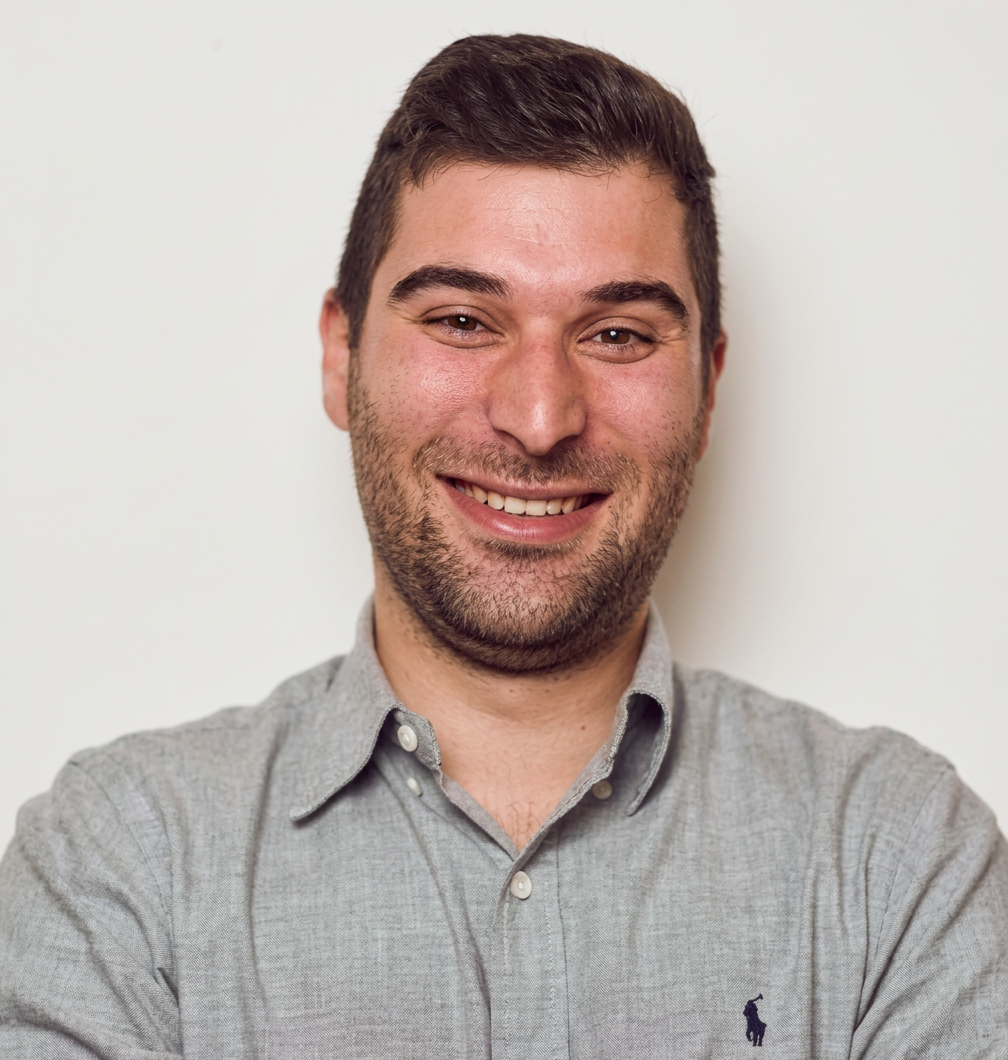



Founder & Lead Physiotherapist
Ilias Paschopoulos
Ilias Paschopoulos is the first and only physiotherapist featured in Tatler's Address Book and Tennis ICON magazine, the luxury sporting and lifestyle magazine produced in association with Sky Sports Tennis and the Lawn Tennis Association (LTA). He is a senior Musculoskeletal (MSK) and Sports Physiotherapist, registered with the Health and Care Professions Council (HCPC) and a member of the Chartered Society of Physiotherapy (CSP).
He graduated from the University of West Attica in Greece and, driven by a strong passion for sports rehabilitation, relocated to London to further his training. There, he completed an MSc in Sports and Exercise Medicine at Queen Mary University of London, graduating with distinction.
Ilias has extensive experience working in busy private clinical settings, managing a broad spectrum of musculoskeletal conditions. He specialises in lower limb injuries affecting the hip, knee, foot, and ankle, as well as sports-related injuries, pre- and post-operative rehabilitation, and degenerative conditions. He also has a particular interest in neck pain and Temporomandibular Joint (TMJ) dysfunction.
Alongside his clinical work, Ilias has worked within professional football academies in both Greece and the UK and is currently a Casual Academy Physiotherapist at Chelsea FC, working with players aged under 9 to under 15.
Ilias works closely with patients throughout their rehabilitation journey, combining hands-on treatment with personalised, gym-based exercise programmes to support recovery, optimise performance, and help individuals return confidently to the activities they enjoy.
Verified Patient Reviews
Click to read verified reviews on Doctify